
Does Consciousness Precede Matter? What the Science Actually Shows
What the 2025 adversarial study revealed about consciousness science, and why mind vs. matter still resists a scientific answer.
There’s a reason a walk in the woods clears your head.
And increasingly, there’s research to explain it. Nature and Mind looks at the science of the human–nature connection: what forest bathing actually does, why moving water relaxes us, and what studies reveal about attention, stress, and time spent outdoors.
Everything here is descriptive and evidence-based. We report what the research shows and point you to the studies themselves — this is science writing, not health or medical advice.

If you’re new, begin with our cornerstone guide and let it point you outward:
Why Humans Need Nature: The Evidence — what the research actually says about nature and the mind.
What measurable things happen to attention, stress, and mood when we spend time in natural settings.
How natural environments and time away from screens affect focus and mental fatigue, according to the studies.
Where landscape, environment, and wellbeing meet — and what the evidence does and doesn’t support.
Studies on shinrin-yoku (forest bathing) report measurable drops in stress markers like cortisol and blood pressure during and after time among trees. We summarize the findings and link the original research.
Researchers studying “blue space” associate proximity to water with lower stress and improved mood, though the mechanisms are still being studied. We report what’s been measured, not promises.
Attention Restoration Theory proposes that natural settings let directed attention recover, and several studies support an effect. We cover the evidence and its limits.
The articles in this category are for general information and education only and are not medical or psychological advice. For health concerns, consult a qualified professional.

What the 2025 adversarial study revealed about consciousness science, and why mind vs. matter still resists a scientific answer.
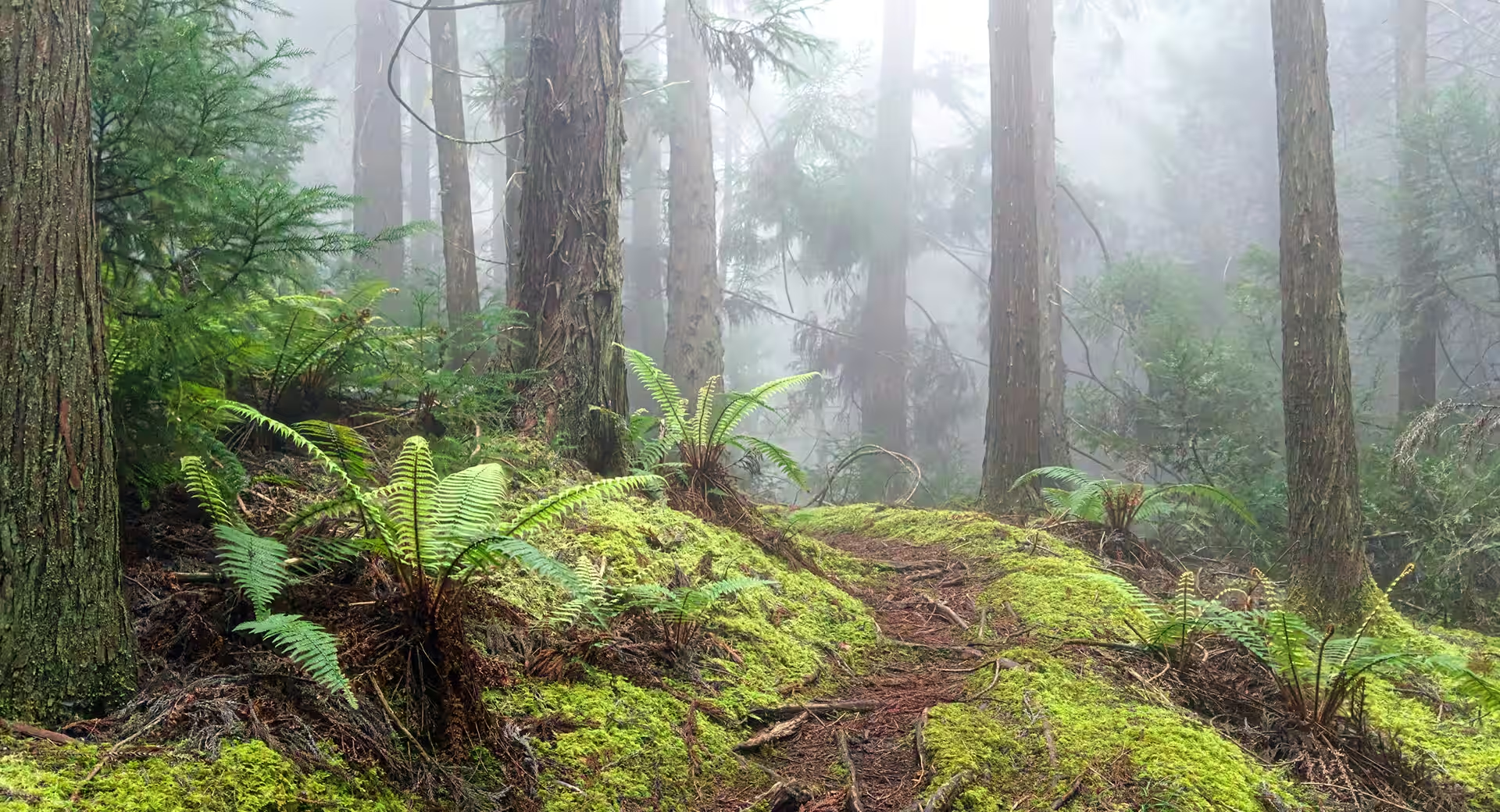
Forest bathing does more than relax you — science shows it boosts immunity, cuts cortisol, and restores attention. Here’s what the research actually proves.